
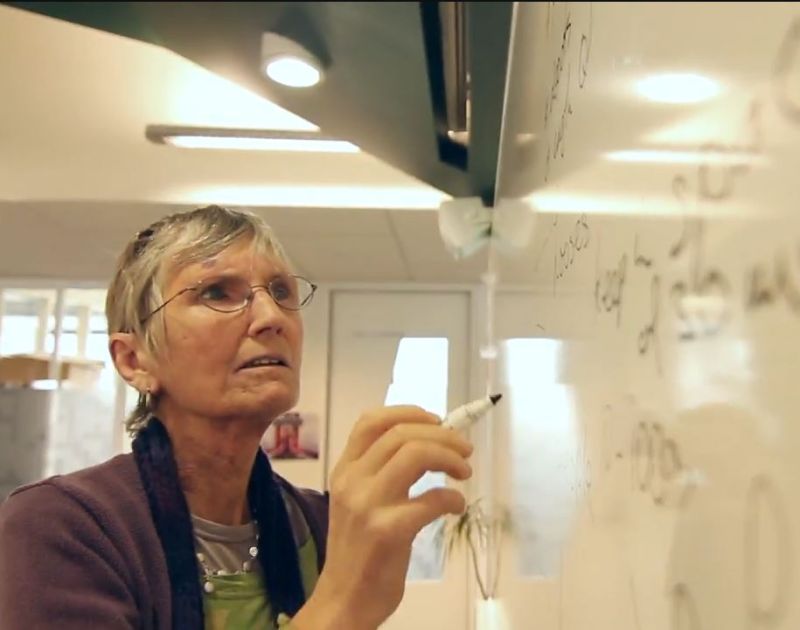
Emeritus Professor Lin Padgham passed away on the 3rd of March 2026. She made many contributions across a number of communities, including AAMAS. She was local co-chair for the second AAMAS (2003, in Melbourne, Australia), programme co-chair for AAMAS 2008, general co-chair for AAMAS 2012, and had been on the IFAAMAS board.
She initiated and led the Intelligent Agents Research group at RMIT University, growing it to become internationally recognized as an active centre of high quality research in cognitive agents. Her own research made seminal contributions to agent-based software engineering, including the Prometheus methodology and the ongoing development of BDI agents, and to agent-based simulation, using BDI agents to model community evacuation behaviours in order to support emergency agencies.
Lin also provided extraordinary service to the Australasian Computing Community over an extended period, including serving as President of CORE (the peak academic body in computing in Australasia) in 2015 and 2016, as Secretary/Treasurer for a number of years prior to that, and then continued contributing as a co-opted member of the CORE executive until 2026. She was awarded CORE’s John Hughes Distinguished Service Award in 2019. Lin also served terms on the ARC (Australian Research Council) Panel for Centres of Excellence and the ARC College of Experts. Within RMIT University Lin served as Head of School.
One of Lin's most significant contributions to computing internationally has been the ICORE rankings. Lin was a tireless champion of conference and journal rankings activities, working to create tools and processes that allow these to be supported in a scalable manner, and be based on measurable and useful attributes, interpreted by expert committees. She established the international consortium, ICORE, that now manages and funds this ranking activity, and for many years put in countless hours to manage and run ranking rounds.
Lin originally studied social work, and then psychology, later completing master and PhD degrees in computer science (respectively in the US and in Sweden, where she lived for a number of years, before returning to Australia).
Tributes from former students and colleagues highlight her kindness, dedication, and her strong values and integrity. She was a fantastic mentor, supporting and helping others to grow and learn, creating opportunities, and instilling in others her values of meticulous and high quality research, and of kindness and care. She made an enormous difference to those who had the privilege to work with her, to the computing community in Australasia and internationally, and to the AAMAS community. She is very much missed.
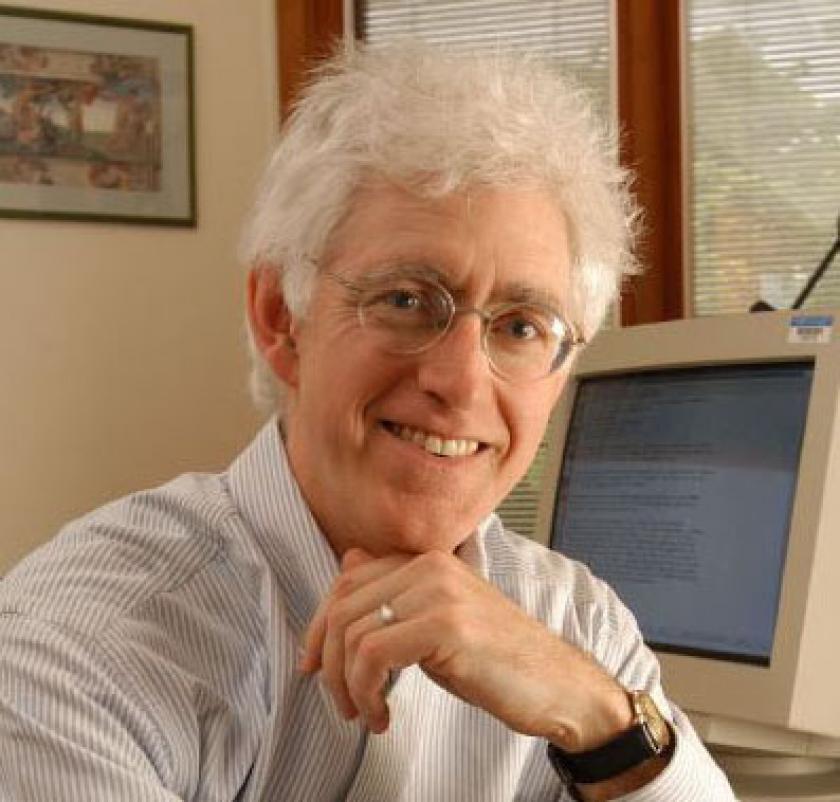
It is with great sadness that we report the passing of Leslie “Les” Gasser on October 16, 2018, at the age of 68. Les was one of the earliest members of the MAS community, played a very large role in crystallizing the field in the mid 1980’s, and was one of the founders and an early president of IFAAMAS. His 1988 book Readings in Distributed AI helped to define the field and provided an entry point where new researchers could quickly understand the state of research and the key issues in the field. At the time of his death he was a Professor in the School of Information Sciences at the University of Illinois at Urbana-Champaign. His recent research - which he conducted actively until the time of his passing - focused on social informatics, information systems, conceptual foundations of information, extreme-scale distributed simulations, and the origins and use of information in biological systems.
Les was a true renaissance man, earning a B.A. magna cum laude in English Literature and being an accomplished musician before getting his Ph.D. in Computer Science from University of California, Irvine. He was widely read in a variety of fields, including sociology, organizational theory and biology, and this allowed him to see the MAS field and distributed computation in general from a broader perspective, including its societal implications. This was reflected in his ground-breaking paper in the AI Journal in 1991 on “Social Conceptions of Knowledge and Action: Distributed Artificial Intelligence and Open Systems Semantics.” He also conducted seminal research on organization structuring and self-design for multi-agent systems, and very early recognized the importance of multi-agent simulation as a tool for modeling complex systems. In 1987 he built MACE - one of the first general purpose multi-agent simulations systems.
Les’ ability to cross disciplinary boundaries was again reflected when he directed the NSF Program on Computation and Social Systems in the mid 90’s, which focused on social integration, impacts, and the use of information technology, organizational knowledge, coordination theory, collaboration technology, and MAS. He was able to communicate these perspectives in the classroom, where he was a highly effective and innovative teacher, much admired by his students.
Les will be sorely missed for his wisdom, collegiality, and the intellectual excitement and vision that he brought to the MAS community. In all aspects of his life, even in his long fight with a rare form of cancer, he was an extraordinary person. We send our condolences to his wife Terry von Thaden and to his children Lisette and Liam.
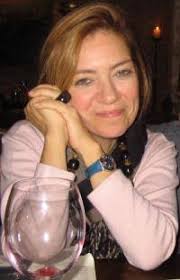
On July 5th 2016, the IFAAMAS community lost one of its most prominent scientists. Rosaria Conte was the head of Laboratory of Agent Based Social Simulation (LABSS) at the ISTC/CNR, Rome, where she led an interdisciplinary research group working at the intersection among cognitive, social and computational sciences.
Born in Foggia, at the Puglia region, she studied philosophy at the Università degli Studi di Roma La Sapienza. In 1980 she received a Postdoctoral Fellowship at the Department of Sociology, University of California, San Diego, USA. In 1985 she completed her education with a visiting period at the Department of Psychology of the Johns Hopkins University, Baltimore, USA.
In 2001 she became Honorary Associate Researcher at the Centre for Policy Modelling (CFPM), Business School, Manchester Metropolitan University, UK. She was one of the founders and past President of the European Social Simulation Association (ESSA) between 2006/2008 and past President of the Italian Association for Cognitive Science (AISC) between 2007/2010. She was also Vice-President of the Scientific Committee of the National Research Council (CNR), Italy, and Member of the Italian National Bioethics Committee.
She was also one of the founders of the Multi-Agent-Based Simulation (MABS) workshop, co-located previously with ICMAS and currently with AAMAS, and whose first edition was in 1998. It is one of the longest established workshops within the IFAAMAS community.
Her main scientific interests were directed to explain social behaviour among autonomous intelligent agents, and to model the dynamics of norms and norm-enforcement mechanisms, including reputation and gossip.
Those who have had the opportunity to live with her can observe her critical academic spirit, her action in favor of affirmative politics in relation to women in science, her good humor, her affection and her contagious laughter. Despite leaving us in July 2016, she leaves an enviable legacy for those who are interested in the subjects that she passionately studied in her scientific career.